Pinhole Glasses Guides, Stenopeic Optics & Care Tips

Magnifying Glasses with LED — 160% hands-free lighted reading eyewear
Pinhole Glasses vs. 160% LED Magnifying Glasses: Which Optical Aid Fits Your Task? 780 580 Pinhole.Store Optical Guides Team

Pinhole Glasses vs. 160% LED Magnifying Glasses: Which Optical Aid Fits Your Task?

At Pinhole.Store, we offer two distinct non-prescription optical aids designed for very different indoor situations: 1.1 mm Stenopeic Pinhole Glasses and 160% Magnifying Glasses with Built-In LED Lights. Many households keep both on hand—here is how to pick the right tool for each task.

When to Choose 1.1 mm Stenopeic Pinhole Glasses

  • Mixed Indoor Distances (Near & Far): Unlike magnifying lenses that blur anything beyond 15 inches, stenopeic apertures increase depth of field for both arm’s-length books and across-the-room television screens.
  • 10–15 Minute Screen & Reading Breaks: Ideal in bright ambient lighting when you want a featherlight (29 g) lens-free routine to rest tired eyes.
  • Best Conditions: Well-lit indoor rooms, regular book print, TV viewing, and guided gaze relaxation.

When to Choose 160% LED Magnifying Glasses

  • Tiny Print & Intricate Close-Up Work: Optical 160% magnification physically enlarges tiny medication labels, serial numbers, needle eyes, crossword clues, jewelry clasps, and circuit boards.
  • Dim or Shadowy Lighting: Whereas pinhole screens reduce incoming light, dual forward-facing ultra-bright LEDs flood your exact workspace with shadow-free illumination.
  • Wear Right Over Prescription Glasses: The wide, flexible bridge fits comfortably over your existing readers or prescription frames while keeping both hands free.

Quick Side-by-Side Comparison

Feature1.1 mm Pinhole Glasses160% LED Magnifying Glasses
Optical MechanismStenopeic depth-of-field aperture160% refractive lens + dual LEDs
Best Working Distance14 inches to across the room (TV)Close-up (8–14 inches)
Lighting RequirementNeeds bright room / reading lampBuilt-in ultra-bright LED lights
Fits Over Glasses?Worn directly on face (29 g)Yes — fits over prescription eyewear

Safety Reminder: Both 1.1 mm pinhole glasses and 160% LED magnifying glasses are strictly for seated, stationary indoor tasks—never wear either product while walking, climbing stairs, or driving.

Browse both options—plus our Pinhole Glasses Case and Magnifying Glasses Case—in the Pinhole.Store catalog, shipped fast from Las Vegas, NV.
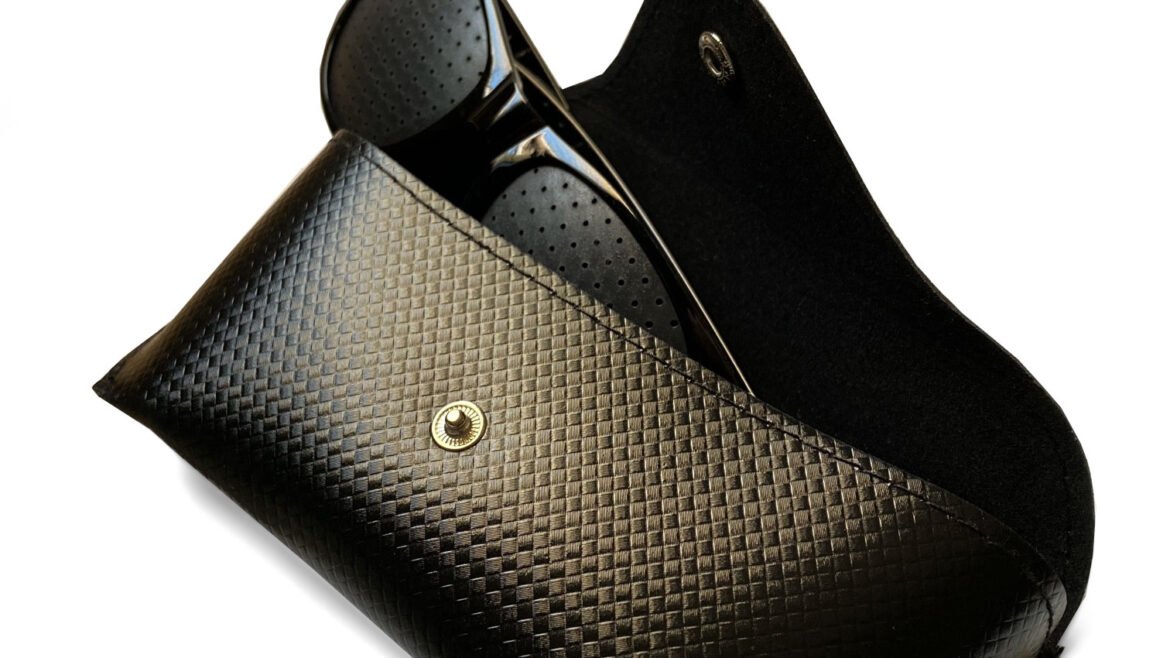
Pinhole glasses stored inside protective black eyewear case
How to Clean & Store Pinhole Glasses Without Clogging the 1.1mm Apertures 768 1024 Pinhole.Store Optical Guides Team

How to Clean & Store Pinhole Glasses Without Clogging the 1.1mm Apertures

Cleaning conventional glass lenses takes one swipe with a cloth, but stenopeic pinhole glasses have dozens of precision 1.1 mm perforations per eye. Wiping them dry with a paper towel or facial tissue often shreds microscopic paper fibers right into the holes, creating fuzzy spots in your field of view. Here is the right 60-second routine.

The 60-Second Lint-Free Cleaning Method

  1. Lukewarm Water Rinse: Hold the glasses under a gentle stream of lukewarm (never boiling hot) tap water to flush loose dust out of the apertures.
  2. One Drop of Mild Dish Soap: Place a tiny drop of plain, lotion-free dish soap on your fingertips and lightly rub both sides of the Nylon screens and the acetate nose bridge.
  3. Rinse Thoroughly & Shake Out Water Drops: Rinse clean, then briskly flick or tap the frame against a clean microfiber towel on your palm so surface-tension water droplets pop out of every 1.1 mm hole.
  4. Air-Dry or Dab With Lint-Free Microfiber: Pat the frame dry with a smooth optical microfiber cloth—never tissues, napkins, or shirt hems—and hold the screens up to a lamp to verify every hole is clear.

What to Avoid

  • Harsh Solvents: Never use acetone, rubbing alcohol above 70%, window cleaner with ammonia, or abrasive toothpaste on acetate frames or matte Nylon inserts.
  • Dashboard Heat: Never leave acetate eyewear on a sunny car dashboard, where temperatures above 140°F (60°C) can warp frames.
  • Loose Pocket or Purse Storage: Unprotected lightweight 29 g temples can bend under keys, books, or heavy items.

Protect Your Eyewear Between Sessions

Storing your glasses inside a Protective Pinhole Glasses Case prevents both dust buildup inside the perforations and accidental hinge stress—keeping your eyewear ready for years of daily indoor use.

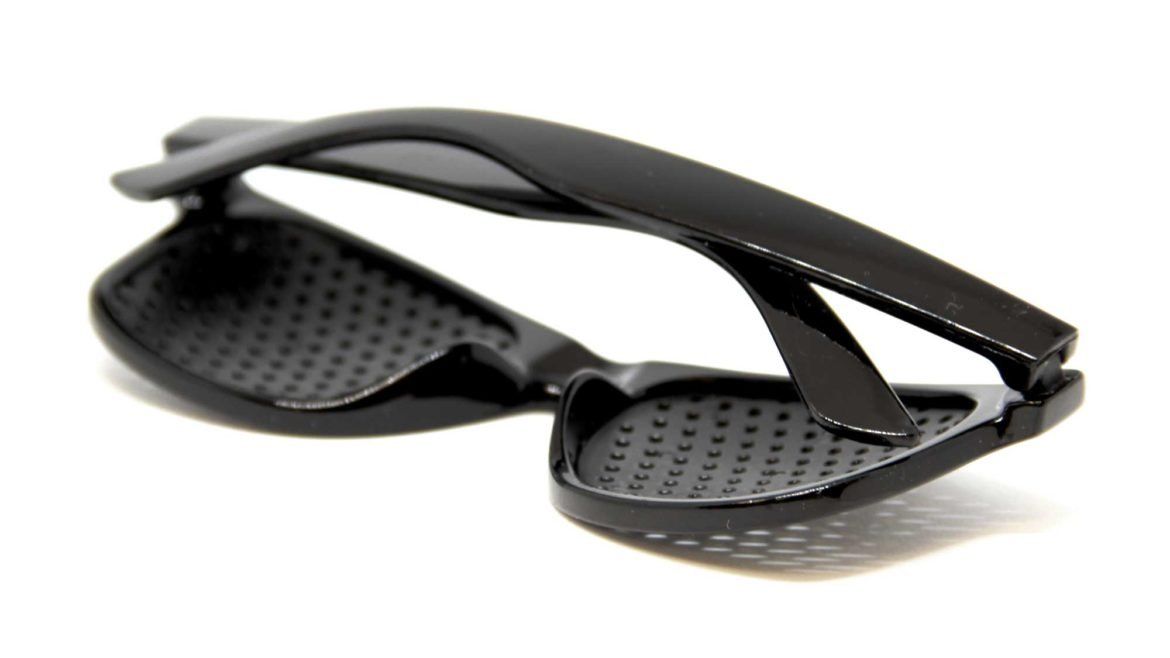
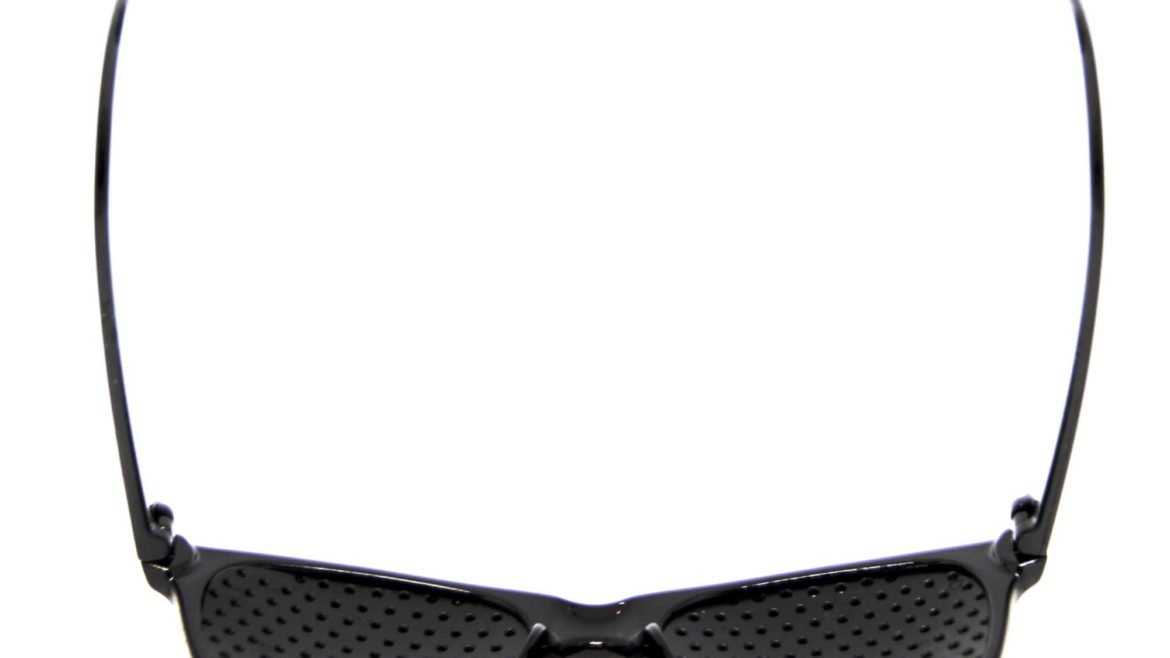
Stenopeic pinhole glasses angled view showing temple arms and perforated lens
Why Do I See a Honeycomb Grid in Pinhole Glasses? 5 Quick Adaptation Fixes 1024 1024 Pinhole.Store Optical Guides Team

Why Do I See a Honeycomb Grid in Pinhole Glasses? 5 Quick Adaptation Fixes

Almost every first-time wearer of stenopeic pinhole glasses notices a honeycomb mesh or faint overlapping rings during the first two minutes. Just like putting on bifocals or looking through a window screen, your brain initially locks onto the barrier right in front of your eyelashes. Here are five immediate fixes.

1. Look Through the Screen, Not At It

Stand near a window screen and stare at the wire mesh: the garden outside blurs. Shift your attention to a tree in the yard, and the mesh practically disappears. Apply the exact same habit with pinhole glasses—pick a well-lit book headline or TV actor’s face several feet away and focus on the meaning of the image, not the plastic frame.

2. Add More Light on Your Target (Not Behind It)

In dim rooms, your pupils dilate and contrast drops, making the black Nylon bridges stand out sharply. Turn on a bright reading lamp aimed at your book, or keep warm room lights on while watching TV, and avoid sitting directly facing an unshaded window.

3. Check Frame Distance on Your Nose Bridge

The closer the perforated screen sits to your eyelashes (without touching them), the wider each 1.1 mm aperture projects across your visual field and the less noticeable the 2.5 mm spacing becomes. Slide the lightweight acetate bridge comfortably up to its natural resting spot.

4. Keep Moving Your Eyes Naturally & Blink Often

Staring rigidly through a single hole freezes your gaze and highlights the circular rim. Let your eyes scan smoothly from word to word and blink normally every few seconds.

5. Inspect the Holes for Dust or Smudges

Even a tiny film of hand lotion or pocket lint across two or three holes creates a blurry patch right in the center of view. Check our cleaning & storage guide and keep your glasses inside a soft-lined protective case between sessions.

Diagram showing how a 1.1mm pinhole aperture blocks peripheral light rays to sharpen indoor focus
How Stenopeic Pinhole Optics Interact With Nearsightedness, Presbyopia & Astigmatism: Honest Physics & Limits 960 716 Pinhole.Store Optical Guides Team

How Stenopeic Pinhole Optics Interact With Nearsightedness, Presbyopia & Astigmatism: Honest Physics & Limits

Important Medical & Optical Fact: Pinhole glasses do not treat, cure, or permanently improve nearsightedness (myopia), farsightedness (hyperopia), presbyopia, or astigmatism, and are not a substitute for prescription lenses or medical eye care. This educational guide explains purely why looking through a 1.1 mm pinhole temporarily narrows the retinal blur circle only while worn in bright indoor light—the same optical physics demonstrated in physics classrooms.

Unlike prescription eyeglasses that must be ground to a specific sphere, cylinder, and axis for one individual, stenopeic pinhole glasses act universally through depth-of-field geometry. How crisp objects look while wearing them indoors depends on the optical nature of the blur.

1. Mild-to-Moderate Distance Blur (Myopia Under 6.00 Diopters)

Adults with mild or moderate nearsighted blur typically notice sharper edges when viewing across-the-room indoor targets such as a television screen or wall clock in bright ambient light. With higher prescriptions above -6.00 diopters, the unfocused blur circle is wide enough that dark grid lines between apertures feel more prominent, making perforated eyewear less comfortable.

2. Close-Up Age-Related Blur (Presbyopia) & Farsightedness

When close-up focus becomes harder under low light, narrowing incoming light beams through 1.1 mm apertures under a bright reading lamp increases near depth of field while worn indoors. For tiny medication labels, threading needles, or dim workbenches where bright task lighting and true lens enlargement are needed, consider our 160% LED Magnifying Glasses instead.

3. Mild Regular Astigmatism

When a cornea bends light unevenly along two meridians, points of light stretch slightly. Blocking outer peripheral rays so only a narrow central beam enters the pupil reduces meridian blur strictly while looking through the holes indoors.

When Pinhole Glasses Will NOT Help

Honest optical guidance matters for your safety. Because pinhole screens block roughly 60–70% of light and only affect geometrical focus, they cannot clear vision loss caused by clouding inside the eye or retinal/optic-nerve conditions—in fact, dimming incoming light can make low-contrast rooms harder to see. Always consult a licensed optometrist or ophthalmologist for any new or changing vision symptoms.

Review full optical specifications and safety warnings on our 1.1 mm Pinhole Glasses product page.

Close-up of 1.1mm pinhole perforations and 2.5mm spacing on Nylon lens
Pinhole Glasses Buying Guide: Why 1.1mm Aperture Size & Matte Nylon Matter 1024 1024 Pinhole.Store Optical Guides Team

Pinhole Glasses Buying Guide: Why 1.1mm Aperture Size & Matte Nylon Matter

At a quick glance in a small thumbnail photo, almost all perforated black eyeglasses look identical. Yet if you read buyer feedback across generic marketplaces, complaints consistently center on three flaws: internal tunnel glare, rough burrs inside drilled holes, and brittle hinges. Before ordering a pair, check these four optical specifications.

1. Aperture Diameter: Why 1.1 mm Is the Sweet Spot

The diameter of each perforation controls both sharpness and brightness (see our guide to stenopeic physics):

  • Oversized Holes (1.6–2.0 mm): Let in plenty of light, but fail to narrow the blur circle enough for crisp reading.
  • Micro Holes (0.5–0.7 mm): Trigger noticeable light diffraction around the rim and dim indoor rooms excessively.
  • Precision 1.1 mm Apertures: Deliver distinct sharpening of text and indoor details while preserving comfortable brightness under standard lamps.

2. Screen Material: Matte Nylon vs. Glossy Thick Plastic

When an opaque insert is stamped or crudely drilled out of thick, shiny ABS plastic, each hole acts like a tiny reflective cylinder. Ambient room light reflects off the inside walls of the hole, producing washed-out halos around bright objects (especially TV screens). Look for thin, matte-black Nylon screens with clean, burr-free edges that absorb stray reflections.

3. Center-to-Center Spacing (2.5 mm)

If holes sit too far apart, your gaze hits wide black dead zones as your eyes track across a line of print. If packed too tightly, thin bridges weaken structurally and let adjacent ghost images overlap. A 2.5 mm uniform grid lets your eyes transition smoothly from word to word.

4. Frame Material, Weight & Dimensions

Check exact measurements before buying:

  • Frame Width & Temple Length: 5.3″ wide × 5.5″ temples (135 mm × 140 mm) fits most adult men, women, and teens comfortably.
  • Weight: Around 1 oz (29 g) in smooth acetate avoids ear and nose soreness during 15-minute sessions.

Every pair at Pinhole.Store is built to these exact 1.1 mm / 2.5 mm matte Nylon specifications and ships directly from Las Vegas, Nevada with multi-pair bundle discounts starting at $11.99 per pair.

Stenopeic pinhole glasses angled view showing temple arms and perforated lens
Using Pinhole Glasses for Computer & Screen Breaks: Practical Desk Guide 1024 1024 Pinhole.Store Optical Guides Team

Using Pinhole Glasses for Computer & Screen Breaks: Practical Desk Guide

Modern knowledge work often means staring at glowing monitors, laptops, and smartphones from morning until night. After hours locked at a 20–24 inch viewing distance, the eye’s ciliary focusing muscles can feel tight, dry, and sluggish when shifting gaze across the room—a cluster of symptoms commonly called computer-related visual fatigue.

Why Screens Tire Your Focusing System

Two things happen simultaneously during prolonged computer work:

  1. Sustained Near Accommodation: Focusing at arm’s length requires continuous muscular effort compared to looking at distant horizons.
  2. Reduced Blink Rate: Studies show blink rates drop by up to 50–60% when reading digital displays, drying out the tear film and scattering light on the corneal surface.

How Stenopeic Pinhole Glasses Fit Into Desk Breaks

Because each 1.1 mm perforation in stenopeic pinhole glasses narrows scattered incoming light rays optically, increasing depth of field so indoor contours appear crisp during a seated 10-minute break away from bright monitor glare. Here is how desk workers use them effectively:

  • Post-Work Decompression (10–15 Minutes): Rather than wearing pinhole glasses all day at a dim spreadsheet, put them on during a 10-minute break away from your primary work monitor—reading printed notes under a warm desk lamp or looking across a bright room.
  • If Viewing a Large Monitor Briefly: Increase screen font size slightly (110–125%), eliminate window glare behind you, sit at full arm’s length, and remember to blink deliberately at the end of every paragraph.
  • Combine With the 20-20-20 Habit: Every 20 minutes of regular screen work, look 20 feet away for at least 20 seconds to let your focusing muscles release tension.

Why Weight & Matte Finish Matter at Your Desk

Heavy frames pinch the bridge of the nose when your eyes already feel tired. Our Pinhole.Store acetate frame weighs just 29 grams (1 ounce) and uses matte-black Nylon inserts so overhead office lights do not bounce back into your eyes. Many customers keep one pair in a protective desk case at work and a second pair at home.

Disclaimer: Persistent headaches, double vision, or chronic dry eye should always be evaluated by an optometrist. Pinhole glasses are a stationary indoor optical aid and are not intended for all-day occupational computer work in dim lighting.

Adult seated indoors under bright reading light enjoying a 10 to 15 minute break wearing pinhole glasses
How to Use Pinhole Glasses Safely: A 10–15 Minute Daily Indoor Guide 960 716 Pinhole.Store Optical Guides Team

How to Use Pinhole Glasses Safely: A 10–15 Minute Daily Indoor Guide

Getting the clearest, most comfortable experience from pinhole glasses comes down to three practical habits: good lighting, relaxed eye movement, and short stationary sessions. If you have just received your first pair, follow this straightforward indoor guide.

Step 1: Set Up Bright, Indirect Indoor Lighting

Because the matte black Nylon screen blocks scattered rays, less total light reaches your retina than with open frames. Always use stenopeic glasses in a brightly lit room:

  • For Reading: Place a desk or floor lamp slightly behind and above your shoulder so light illuminates the page directly without shining straight into the front of the glasses.
  • For Television: Keep gentle ambient room lights on rather than sitting in a pitch-dark room, reducing contrast fatigue.

Step 2: Start With 5–10 Minutes to Let Your Brain Adapt

During your very first wear, it is completely normal to notice the honeycomb pattern of the screen. That happens when your visual cortex focuses on the black plastic 15 mm in front of your eyes instead of looking through the 1.1 mm openings at your book or screen.

  1. Sit comfortably in a chair and look at an object, book, or TV 2 to 10 feet away.
  2. Blink naturally every few seconds—never stare rigidly through a single hole.
  3. Within 3 to 5 short daily sessions, visual adaptation helps the black grid fade into the background while the target image stays sharp.

Step 3: A Simple 10–15 Minute Stationary Routine

Many customers enjoy using their pinhole glasses once a day after computer work or in the evening:

  • Minutes 1–3 (Smooth Scanning): Slowly trace the four corners of a TV frame, wall picture, or book page clockwise 10 times, then counter-clockwise 10 times, breathing and blinking normally.
  • Minutes 4–10 (Relaxed Reading or TV): Read a printed book, magazine, or watch a favorite show while letting your gaze glide across lines rather than locking your head in place.
  • Minutes 11–15 (Near-to-Far Shift): Alternate looking at a word at arm’s length for 5 seconds, then across the room at a distant calendar or clock for 5 seconds.

Essential Safety Rules You Must Follow

  • Never drive, cycle, or walk outdoors in traffic while wearing pinhole glasses. Peripheral vision and low-light contrast are significantly reduced.
  • Never use them as sunglasses or look toward the sun; perforations transmit direct UV and visible solar rays without UV filtering.
  • Keep apertures clean: Store your eyewear in a protective Pinhole Glasses Case so dust or skin oils do not clog individual holes.

Looking for a pair for home and office? Save automatically with our 2-pair ($12.99/ea) and 3-pair ($11.99/ea) bundles.

Diagram showing how a 1.1mm pinhole aperture blocks peripheral light rays to sharpen indoor focus
How Do Pinhole Glasses Work? The Physics of Stenopeic Optics Explained 960 716 Pinhole.Store Optical Guides Team

How Do Pinhole Glasses Work? The Physics of Stenopeic Optics Explained

When someone puts on a pair of authentic pinhole glasses in a well-lit room for the first time, the most common reaction is surprise: without a single curved glass or plastic lens in the frame, blurry print on a book page or television screen suddenly looks noticeably sharper. There is nothing mysterious about this effect—it relies on a classic principle of geometrical optics known as the stenopeic (pinhole) effect.

1. Why Unfocused Eyes See Blur: The Circle of Confusion

In an eye with no refractive error, the cornea and crystalline lens bend incoming rays of light from every part of the pupil so they converge cleanly onto a single focal point on the retina. When an eye is nearsighted (myopic), farsighted (hyperopic), presbyopic, or astigmatic, rays entering near the outer edges of the pupil land slightly in front of or behind the retina instead of meeting at one point.

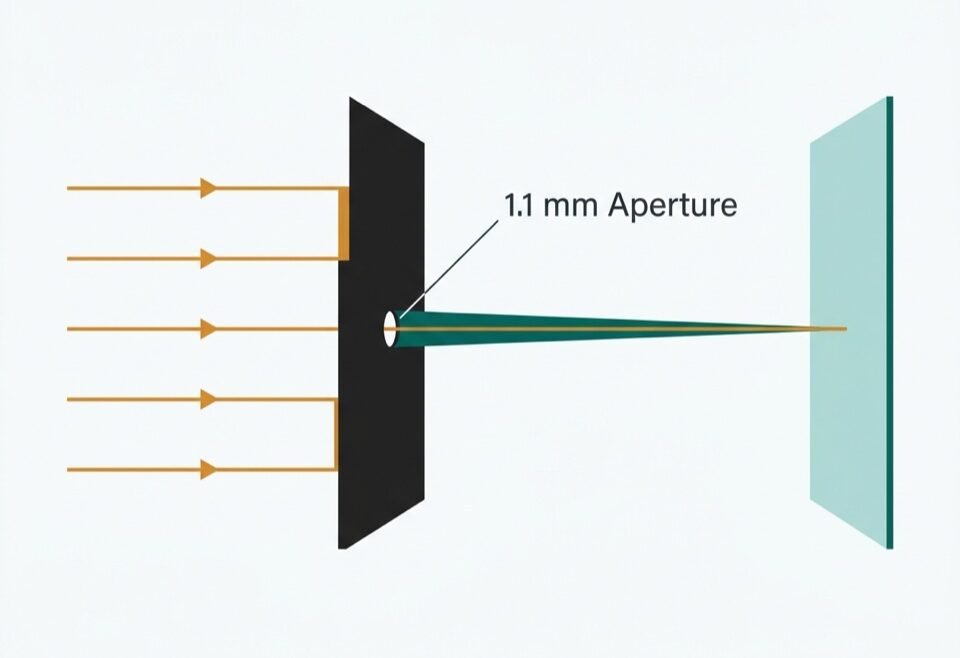
Instead of forming a crisp point, each tiny detail in the scene spreads into a fuzzy disc called the circle of confusion. When thousands of overlapping blur circles pile up on the retina, text edges look soft, doubled, or washed out.

2. The Camera Aperture Analogy (f-Stop Depth of Field)

Photographers use the exact same physics every day. A camera lens wide open at f/1.4 has a very shallow depth of field—anything slightly out of focus blurs immediately. Stop that same lens down to f/16 or f/22 (a tiny aperture), and objects both near and far become sharp at the same time.

Stenopeic glasses place an opaque matte-black screen perforated with tiny 1.1 mm apertures in front of each eye. Each perforation blocks wide-angle peripheral rays and admits only a narrow, centered pencil of light straight through the middle of your pupil. Because narrow central rays barely diverge, the blur circle on the retina shrinks dramatically—increasing depth of field instantly.

3. Why Eye Doctors Use a Single Pinhole Occluder During Eye Exams

Optometrists and ophthalmologists routinely use a single-hole clinical instrument called a pinhole occluder during standard eye examinations. If a patient’s distance chart acuity improves when looking through a ~1.0–1.2 mm pinhole, it tells the clinician that the blur is primarily optical (refractive) rather than caused by retinal or optic-nerve disease.

Consumer stenopeic eyewear applies that optical principle across a honeycomb grid of holes spaced 2.5 mm apart, allowing your gaze to move comfortably across a book page or television screen rather than peeking through one fixed opening.

4. Why Aperture Diameter (1.1 mm) and Matte Nylon Matter

  • Too Large (> 1.5 mm): Wide holes let too many off-axis rays enter the pupil, leaving text blurry.
  • Too Tiny (< 0.8 mm): Light waves bend around microscopic edges (Fraunhofer diffraction), creating fuzzy halos while making the view overly dark.
  • 1.1 mm Optimal Balance: Precision 1.1 mm perforations in non-reflective matte Nylon minimize internal rim glare while maintaining clear indoor contrast.

5. Realistic Expectations & Safe Indoor Use

Understanding optical physics also clarifies what pinhole glasses can and cannot do:

  • Immediate Optical Clarity While Worn: Text and contours appear crisper while looking through the apertures in bright ambient light.
  • Not a Medical Cure: Pinhole glasses do not reshape the cornea or permanently cure myopia, astigmatism, or eye disease, and they never replace comprehensive eye exams.
  • Stationary Indoor Use Only: Because the opaque grid blocks roughly two-thirds of incoming light and restricts side vision, never wear pinhole glasses for driving, walking in traffic, stairs, or operating equipment.

Ready to experience stenopeic optics firsthand? Explore our 1.1 mm Pinhole Glasses here or read our 10–15 minute daily indoor usage guide.