Cleaning conventional glass lenses takes one swipe with a cloth, but stenopeic pinhole glasses have dozens of precision 1.1 mm perforations per eye. Wiping them dry with a paper towel or facial tissue often shreds microscopic paper fibers right into the holes, creating fuzzy spots in your field of view. Here is the right 60-second routine.
The 60-Second Lint-Free Cleaning Method
- Lukewarm Water Rinse: Hold the glasses under a gentle stream of lukewarm (never boiling hot) tap water to flush loose dust out of the apertures.
- One Drop of Mild Dish Soap: Place a tiny drop of plain, lotion-free dish soap on your fingertips and lightly rub both sides of the Nylon screens and the acetate nose bridge.
- Rinse Thoroughly & Shake Out Water Drops: Rinse clean, then briskly flick or tap the frame against a clean microfiber towel on your palm so surface-tension water droplets pop out of every 1.1 mm hole.
- Air-Dry or Dab With Lint-Free Microfiber: Pat the frame dry with a smooth optical microfiber cloth—never tissues, napkins, or shirt hems—and hold the screens up to a lamp to verify every hole is clear.
What to Avoid
- Harsh Solvents: Never use acetone, rubbing alcohol above 70%, window cleaner with ammonia, or abrasive toothpaste on acetate frames or matte Nylon inserts.
- Dashboard Heat: Never leave acetate eyewear on a sunny car dashboard, where temperatures above 140°F (60°C) can warp frames.
- Loose Pocket or Purse Storage: Unprotected lightweight 29 g temples can bend under keys, books, or heavy items.
Protect Your Eyewear Between Sessions
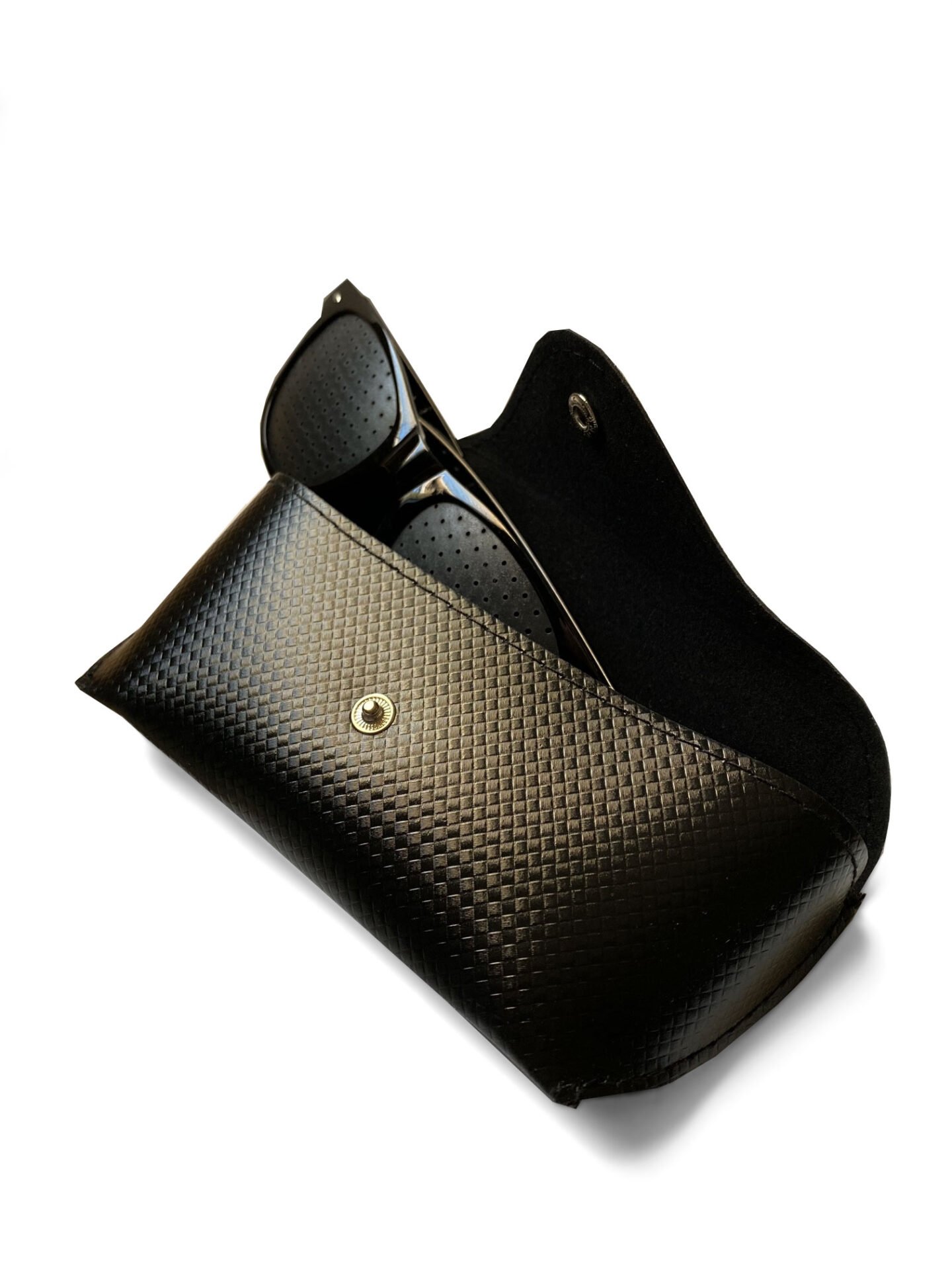
Storing your glasses inside a Protective Pinhole Glasses Case prevents both dust buildup inside the perforations and accidental hinge stress—keeping your eyewear ready for years of daily indoor use.
